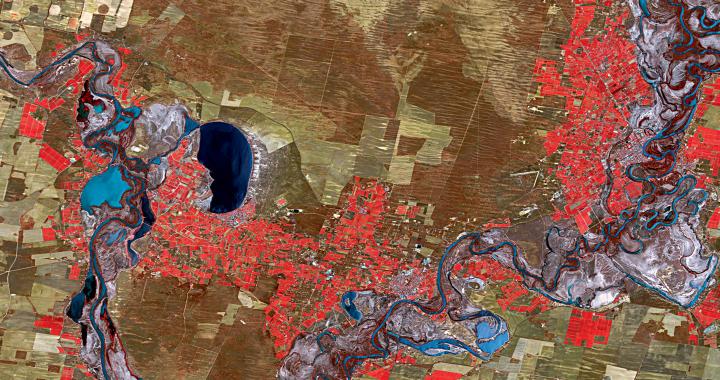
It is widely accepted that human influence has warmed the atmosphere, ocean and land. Measurements of the average temperature at the Earth’s surface show it has risen by about 1.2°C since the pre-industrial period. Each of the last three decades has been hotter than the previous one and the 10 warmest years on record have occurred between 2014 and 2023, with the United Kingdom (UK) experiencing the same rising temperatures.
Along with warming at the Earth’s surface, many other climate changes are occurring, including warming oceans, melting polar ice and glaciers, rising sea levels and other extreme weather events.
Global climate change is not a future problem; it is very much here and now. Changes to Earth’s climate, driven by increased human emissions of heat-trapping greenhouse gases, are already having widespread effects on the environment.
Higher temperatures and heatwaves are causing droughts, wildfires and loss of fresh water supplies. The rising sea levels from polar and glacier melts, along with extreme weather events, are causing more frequent and more severe floods. Increasing sea surface temperatures are causing ocean acidification, affecting the biological make-up of the oceans, biodiversity and the ocean food chain.
The impact of climate change affects all aspects of the global natural or manmade environment.
- Environmental protection
- Flood mapping and management
- Coastal erosion monitoring
Satellite observations have enabled major scientific advances in our understanding of climate change, with their measurements on large temporal and spatial scales key to understanding the evolution of parameters about the atmosphere, land and ocean in our Earth system. Several key initiatives give Telespazio UK major involvement in the provision and use of satellite observations to help stakeholders monitor, mitigate and adapt to climate change.
Moreover, all modes of transportation rely on the burning of fossil fuels in order to operate. Notwithstanding the introduction of alternative fuel or vehicles such as electric battery storage, hydrogen fuel cells, etc, fossil fuel emissions will still be with us for many years to come. But it’s not all about the type of fuel being used: it becomes paramount that all modes of transport become much more efficient in fuel usage, which means better route planning and route optimisation. Resilient Position, Navigation & Timing (PNT) is a major part of many Critical National Infrastructure (CNI) and especially so in the transport sector: aviation, maritime, rail and land mobile applications are all hugely reliant on Global Navigation Satellite Systems (GNSS), such as GPS and Galileo. However, GNSS are all vulnerable to interference due to the extremely low signal power. Here at Telespazio, we are creating new methods of PNT to provide aiding and alternatives to GNSS, and hence maintain and improve the fuel efficiency of transport systems.
Telespazio UK climate capabilities span all aspects of the value chain.